
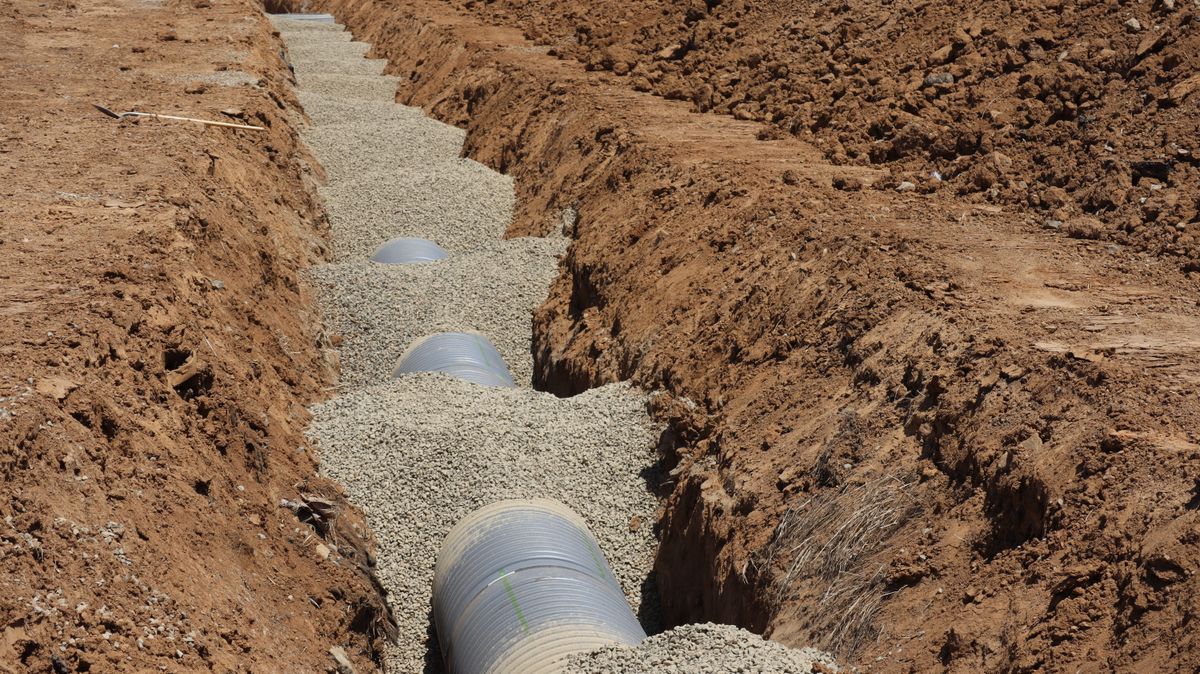
Photo by D Goug on Pexels
Updated November 5, 2026 · By Michael Gonzales · Prices from HomeGuide and Angi; insurance notes from the Texas Office of Public Insurance Counsel
Disclosure: 1-800Deals is a contractor directory. We may earn a commission from some affiliate links on this site, at no extra cost to you. Listings never change the facts or prices on this page.
Short answer: Replacing a sewer line costs $50 to $250 per foot, per HomeGuide and Angi. For a typical 40-foot line, that's about $2,000 to $10,000, with a national average of $6,000 at HomeGuide. Trenchless methods run $60 to $250 per foot but save on yard and driveway repairs. Partial repairs often cost far less.
Compare local plumbers and sewer line contractors, or let us match you with a plumber. We also list plumbers in Los Angeles, Phoenix, San Antonio and Columbus.
How much does sewer line replacement cost in 2026?
The length of pipe between your house and the street drives most of the price. HomeGuide says a full replacement usually covers about 40 feet, while a partial job covers 1 to 15 feet.
| Source | Per foot | Typical job | Average |
|---|---|---|---|
| HomeGuide (Dec 2025) | $50 to $250 | $2,000 to $10,000 for 40 ft | $6,000 (low $500, high $20,000) |
| Angi (Oct 2026) | $50 to $250 | $1,388 to $5,323 | $3,319 across 1,037 projects |
Swipe to see more
Angi's average is lower because its data mixes partial and full jobs. HomeAdvisor shows the same numbers as Angi, so it isn't counted as a separate estimate. If your line is long, deep or under concrete, plan from HomeGuide's per-foot figures.
How much does it cost per foot by line length?
HomeGuide's prices by length, for the full job:
| Line length | Cost |
|---|---|
| 10 feet | $500 to $2,500 |
| 20 feet | $1,000 to $5,000 |
| 40 feet | $2,000 to $10,000 |
| 60 feet | $3,000 to $15,000 |
| 80 feet | $4,000 to $20,000 |
Swipe to see more
Angi says sewer lines commonly run 50 to 75 feet, and even 10 extra feet can add thousands to the total. A 50-foot line at $50 to $250 per foot works out to roughly $2,500 to $12,500.
Trenchless vs. traditional: which costs less?
Traditional replacement means digging a trench along the whole line, pulling the old pipe and laying new pipe. Trenchless methods replace or line the pipe through one or two small access holes.
| Method | HomeGuide (per ft) | Angi (per ft) | How it works |
|---|---|---|---|
| Traditional (trench) | $50 to $250 installed, plus $5 to $12 to dig | Trenching adds $4 to $12 | Open trench, new pipe |
| Pipe bursting | $60 to $200 | $60 to $200; $150 to $190 on its trenchless guide | Pulls new pipe through, breaking the old one |
| Pipe lining (CIPP) | $90 to $250 | $90 to $250; $135 to $150 on its trenchless guide | Hardens a resin liner inside the old pipe |
| Spin casting | $80 to $250 | Not listed | Sprays a coating inside the pipe |
Swipe to see more
Per foot, the two approaches overlap. The real difference is what happens after. A trench through a lawn, garden or driveway has to be repaired, and HomeGuide lists landscaping at $4 to $12 per square foot, tree removal at $400 to $1,200, and concrete removal at $3 to $8 per square foot. Angi puts breaking and restoring a concrete slab at $300 to $350 per linear foot for that section.
Trenchless isn't always an option. Angi says it's not suitable for pipes with major structural problems, such as a collapsed line or improper sloping, which need traditional excavation. Ask for a camera inspection before you accept either method.
What else adds to the cost?
| Extra | HomeGuide | Angi |
|---|---|---|
| Video camera inspection | $125 to $500 | $100 to $500 |
| Permits | $30 to $500 | Up to $1,000 (trenchless guide) |
| Backflow preventer | $150 to $1,200 | $150 to $1,150 |
| New cleanout | $500 to $2,000 | Not listed |
| Plumber labor | $75 to $150 per hour | $45 to $200 per hour |
| Excavation | $5 to $12 per ft (trench) | $50 to $200 per ft, depending on soil, depth and access |
Swipe to see more
Pipe material matters less than you might think, since it's a small part of the bill. HomeGuide lists PVC at $3 to $8 per foot and cast iron at $20 to $75. HomeGuide also notes that ABS pipe is banned in some places, such as California, so check local code.
How long do sewer lines last?
HomeGuide says sewer lines last 30 to 100 years, depending on material. Older Orangeburg and clay pipes last 30 to 60 years, while PVC, cast iron and copper last 50 to 100 years. Soil, tree roots and maintenance all shorten or extend that.
HomeGuide lists the common warning signs as bad odors, gurgling sounds, clogged drains, debris in the bath or basement, and leaks or puddles. Angi adds frequent backups despite cleaning and minor repairs. If one drain is slow, start with drain cleaning. If the problem keeps coming back, a camera inspection shows whether the line itself has failed.
What is the cheapest way to replace a sewer line?
The cheapest fix is the smallest one that solves the problem. HomeGuide lists sewer line repairs at $150 to $3,800, far below a full replacement. If a camera shows one cracked or root-damaged section, a spot repair or partial replacement of 1 to 15 feet may be enough.
For a full replacement, the cheapest method depends on what sits above the pipe. Under open lawn, a traditional trench can cost less. Under a driveway, patio or mature trees, trenchless usually comes out ahead once you add restoration costs. HomeGuide also advises against simply taking the lowest quote, since quality may suffer.
Will insurance pay for sewer line replacement?
Usually not under a standard policy. HomeGuide says most homeowners policies don't cover wear and tear from lack of maintenance, though many cover damage from accidents or vandalism. Angi says replacement isn't covered by a standard policy, but add-on endorsements exist.
That add-on is often called service line coverage. The Texas Office of Public Insurance Counsel says it's optional, not part of the base policy, and gives the example of $10,000 or $25,000 of coverage with a $500 deductible. Ask your agent what your policy includes before the line fails. A home warranty is a different product; see our home warranty cost guide for what those plans cover.
You usually pay for the line from your house to the main. HomeGuide says homeowners are responsible for the pipe that connects to the main line, while the city handles problems in the main itself.
How can you save on a sewer line replacement?
- Get a camera inspection first. It shows whether you need a spot repair, a partial or a full replacement.
- Get at least three quotes. Ask each company whether it's quoting trenchless or traditional, and why.
- Ask about restoration. Confirm whether lawn, driveway and landscaping repair are in the price.
- Check permits and licensing. Ask who pulls the permit. Our contractor license lookup by state shows how to check a plumber's license.
- Ask about the warranty. Get the parts and labor warranty in writing.
Ready to compare? Get matched with a plumber, or see our plumbing gear guide for basic tools. Sewer work doesn't get energy rebates, but if you're also replacing a water heater, check our water heater replacement cost guide and the ZIP code rebate finder.
Frequently asked questions
How much does it cost to replace a sewer line under a house? Expect more than a yard line. Angi puts breaking and restoring a concrete slab at $300 to $350 per linear foot for that section. Angi also says trenchless methods are a good fit for lines under concrete, because they avoid digging up the slab.
How often do residential sewer lines need to be replaced? Rarely. HomeGuide says lines last 30 to 100 years. Clay and Orangeburg pipes are at the short end (30 to 60 years), and PVC, cast iron and copper at the long end (50 to 100).
How much does it cost to replace 50 feet of sewer line? At $50 to $250 per foot, about $2,500 to $12,500. Angi's trenchless guide lists $2,700 to $13,750 for 45 to 55 feet.
How long does sewer line replacement take? HomeGuide says one to five days, depending on the length of the line, the method and what has to be dug up and restored.
Is trenchless sewer replacement worth it? Often, if the line runs under a driveway, patio or landscaping. Per foot it costs about the same as traditional work, and it avoids most restoration costs. It won't work on a collapsed or badly sloped line.
Do I need a permit to replace a sewer line? Usually yes. HomeGuide lists permits at $30 to $500, and Angi says permits can run up to $1,000. Your plumber should pull it.
Sources
HomeGuide: Sewer line repair and replacement cost (updated Dec 22, 2025) · Angi: Sewer line replacement cost (updated Oct 29, 2026) · Angi: Trenchless sewer line replacement cost (updated Oct 23, 2026) · HomeAdvisor: Sewer main repair cost (updated Jun 19, 2026) · Texas Office of Public Insurance Counsel: Service line coverage. Checked November 2, 2026; re-verified November 5, 2026.